
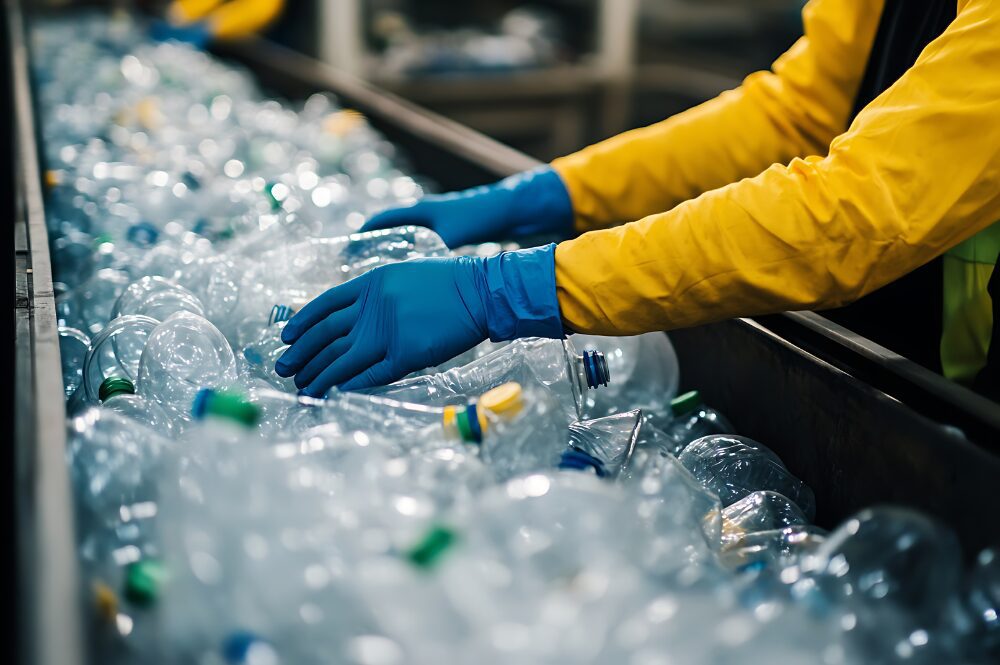
Sustainability usually lands on an engineer’s desk in a very real way: material callouts on drawings, supplier questionnaires, and customers asking tougher questions about environmental impact. Injection molding can support those goals, but only if the sustainable materials you choose match the job. The right choice can lower plastic waste and improve efficiency. The wrong choice can raise energy consumption, scrap, and rework.
Key Takeaways
- Sustainable plastic materials come in multiple categories, and each has tradeoffs worth testing.
- Recycled plastics can work well when recycled materials are consistent and verified.
- Bioplastics and biodegradable plastics suit specific packaging materials, not every molded component.
- Design choices can reduce plastic waste, energy usage, and overall environmental impact.
- Clear end-of-life planning, including recycling and proper disposal, matters as much as resin selection.
Why “Sustainable” Means Different Things in Plastic Materials
“Sustainable” can refer to recycled materials, renewable raw materials, compostable performance, or lower emissions across production. Those are all valid aims, but they are not the same. Some sustainable materials focus on reuse and recycling. Others focus on renewable resources and reducing reliance on fossil fuels and petrochemicals. A few focus on biodegradability in controlled systems.
When teams get stuck, it is often because they are trying to solve three categories of problems with one resin. A better approach is to name the goal clearly: reduce waste, lower greenhouse gas emissions, reduce carbon dioxide, improve recycling rates, or support green initiatives through materials innovation.
Two Classes of Sustainable Options (and Why It Helps to Separate Them)
A helpful way to think about the landscape is two classes:
Class 1: Circularity-focused materials
These emphasize recycling, reuse, and using recycled plastics to offset demand for conventional plastics and traditional plastics.
Class 2: Renewable or degradable materials
These emphasize renewable raw materials, bioplastics, and in some cases biodegradable or compostable pathways.
This split keeps decision-making practical. A recycled polymer strategy and a compostable polymer strategy are built on different assumptions about disposal, infrastructure, and performance requirements.
Three Categories You’ll Most Likely Evaluate
Recycled Plastics (PCR and PIR)
Recycled plastics typically show up as post-consumer recycled (PCR) or post-industrial recycled (PIR). PIR can be more consistent because it comes from manufacturing scrap streams. PCR can vary more due to consumer usage, sorting, and contamination.
Recycled plastics can be a strong fit for many molded components when the mechanical properties and appearance requirements are reasonable. Think covers, housings, brackets, and non-cosmetic internal components. The success factor is quality control: you want documentation, consistent lots, and incoming checks so the manufacturing process stays stable and the final part meets spec.
This approach can reduce plastic waste, lower landfill pressure, and support green initiatives without betting everything on a new polymer family.
Bioplastics Made From Renewable Resources
Some bioplastics are derived from renewable raw materials such as plant-based feedstocks. They are often positioned as environmentally friendly because they reduce dependence on fossil fuels, which can help address global warming concerns when paired with responsible operations and energy choices.
That said, “bio-based” does not automatically mean biodegradable. Some bio-based plastics behave similar to conventional plastics in molding, which can be a benefit. Others have moisture sensitivity or narrower process windows, which can increase scrap if the process is not dialed in.
Biodegradable Plastics and Compostable Options
Biodegradable plastics are often discussed for packaging materials, including food packaging, where end-of-life is a big driver. A common example is polylactic acid (PLA), which is widely known in the compostable space. Another material family you may see is polybutylene adipate terephthalate (PBAT), sometimes used in flexible applications. These materials can be useful, but they need the right disposal environment.
Here is the catch: “biodegradable” can mean different types of breakdown depending on conditions. Industrial composting and anaerobic digesters can support certain biodegradable pathways. Landfill conditions often do not. If a program is meant to reduce waste, it is worth asking “how much waste” is truly diverted, and whether proper disposal infrastructure exists for the community and the consumer base.
Sustainable Injection Molding Levers Beyond the Resin
A sustainable resin only helps if the production process supports it. Sustainability improvements often come from basic, repeatable wins:
- Reducing scrap and rework: fewer rejects means less waste and lower energy consumption per good part.
- Shorter, stable cycles: improved efficiency can reduce electricity usage and emissions.
- Part consolidation: fewer components can simplify assembly, reduce packaging, and shrink supply chain complexity.
- Right-sizing performance: choosing a polymer that meets requirements without over-engineering can cut cost and energy.
When teams focus only on material marketing, they can miss the operational improvements that drive the biggest reductions in waste and emissions.
How to Choose the Right Sustainable Materials for Your Application
Start with the application and work backward:
- Environment and exposures: temperature, chemicals, UV, moisture, cleaning agents, wear.
- Performance needs: stiffness, impact resistance, fatigue life, creep, dimensional stability.
- End-of-life: realistic recycling streams, reuse plans, compostable requirements, or proper disposal pathways.
- Process fit: drying requirements, melt stability, shrink behavior, sensitivity to shear.
- Documentation: traceability, test data, recycled content verification, supplier consistency.
If your part is in packaging materials or food packaging, end-of-life becomes even more important because those products move through high-volume consumer channels. If your part is a long-life industrial component, durability and service life can be the strongest sustainability lever.
For a credible baseline on recycling and waste reduction programs, the U.S. EPA’s recycling guidance is a solid reference.
Working With PMC on Sustainable Material Development
Sustainable plastic materials decisions work best when design, processing, and testing are treated as one system. In full-service programs, PMC supports material evaluation with a practical lens: can the resin run consistently, meet properties, and maintain quality at scale. That includes reviewing risk points that can create waste, validating recycled materials streams, and making sure the manufacturing process stays stable as volume grows.
If your team is exploring recycled plastics, bioplastics, or biodegradable plastics for a new molded part, connect with PMC here. Share your performance requirements and sustainability goals, and we will help you build a plan that balances durability, compliance, and environmental impact.
FAQs
Are recycled plastics reliable for injection molded parts?
Yes, recycled plastics can be reliable when recycled materials are consistent and verified. Documented specs, incoming checks, and pilot runs help protect product quality and reduce waste.
Do biodegradable plastics break down in a landfill?
Often, no, not in the way people expect. Many biodegradable plastics need controlled conditions, such as industrial composting or anaerobic digesters, to break down predictably, so proper disposal planning matters.
Are bioplastics always better for the environment?
Not automatically. Some bioplastics use renewable resources, but environmental impact depends on production, energy use, disposal pathways, and whether the part lasts and performs as intended.
What is PET and why does it come up in sustainability discussions?
Polyethylene terephthalate is a thermoplastic polymer used widely in packaging. It is commonly discussed because recycling infrastructure is more established for PET in many markets.
How can injection molding reduce plastic waste besides changing materials?
Reducing scrap, stabilizing cycle times, optimizing tooling, and cutting rework can lower plastic waste fast. Those process improvements often deliver measurable sustainability gains without compromising performance.